Dog Safety During Summer Walks: How to Know When It’s Safe to Go
Cat Care & Enrichment Specialists
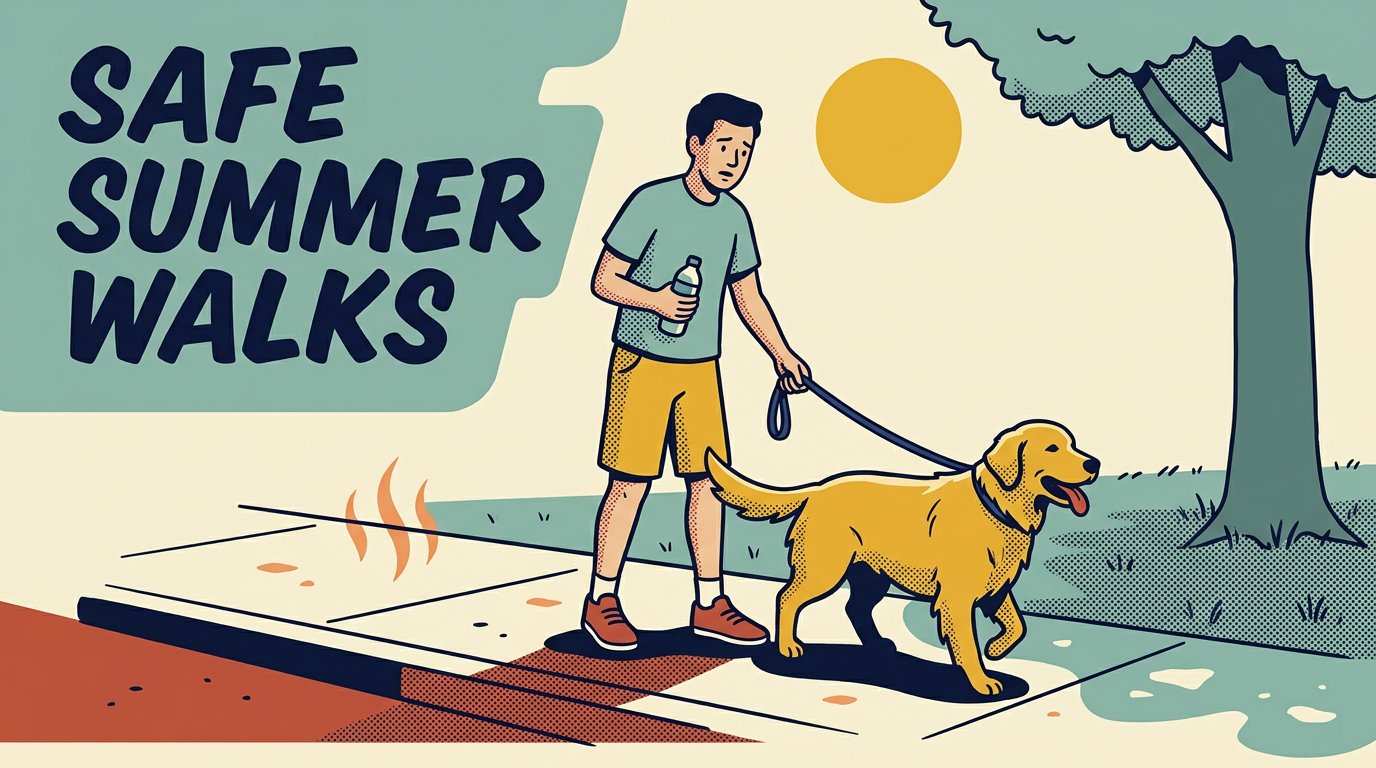
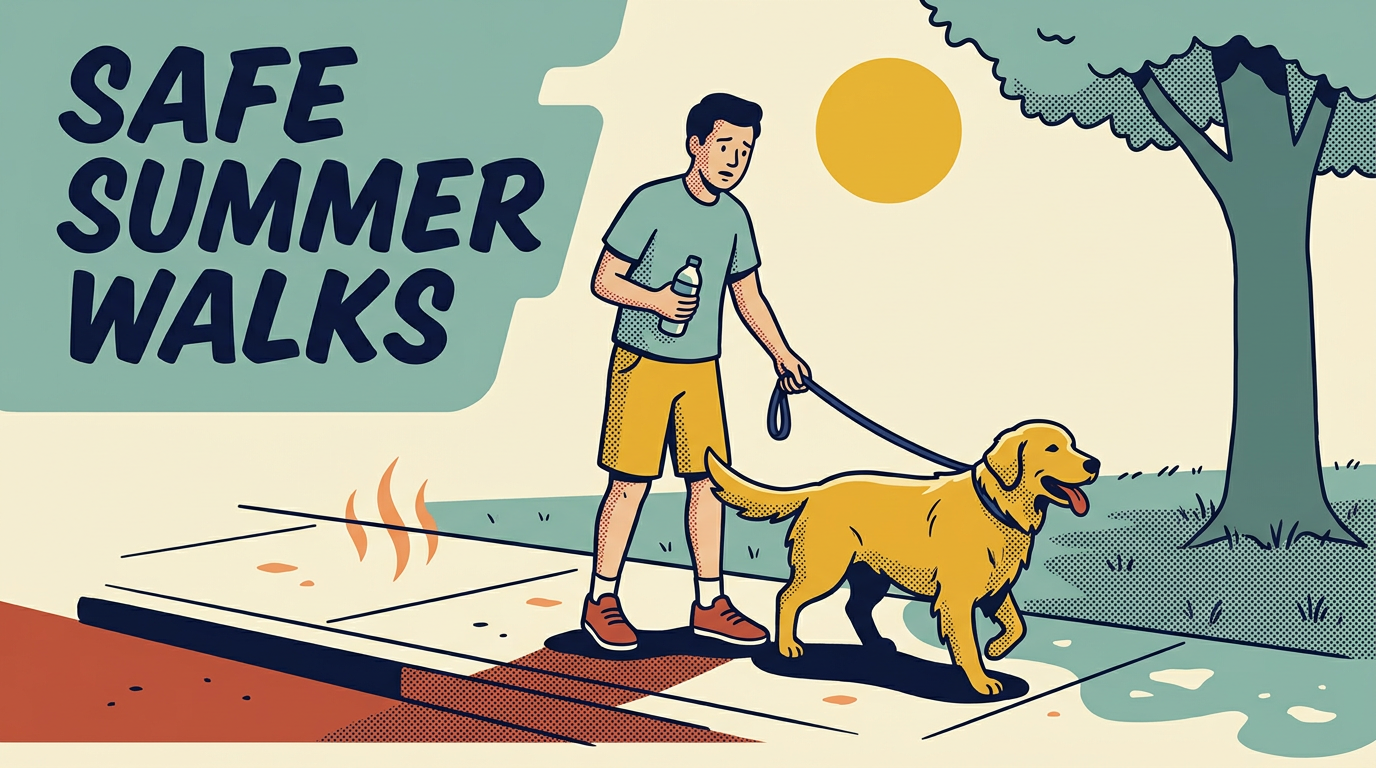
A summer walk can look harmless right up until it isn’t. The tricky part of dog safety during summer walks is that air temperature alone does not tell you what your dog’s body, paws, and breathing are dealing with.
A safer rule is simple: check the conditions before you leave, watch your dog during the walk, and treat early warning signs as a reason to shorten or stop—not to push through the routine. That matters because dogs can become distressed from heat, hot pavement, humidity, dehydration, and overexertion faster than many owners expect.
Here’s the fast version before we go deeper:
If this is true | Safer decision |
|---|---|
Pavement feels very hot, shade is limited, or humidity is high | Shorten or reschedule |
Your dog is panting hard early, slowing down, or seeking shade | End the walk and cool down |
Your dog seems weak, disoriented, wobbly, or refuses to continue | Stop immediately |
Conditions feel questionable and your dog is high-risk for heat | Skip the walk and choose indoor activity |
That’s the core decision rule. The rest of this guide will help you apply it with more confidence.
Why warm-weather walks become risky faster than people expect
Many owners think, “It’s warm, but not that hot,” and head out as usual. The problem is that a dog’s risk level is shaped by more than the temperature you see on your phone.
A walk can become unsafe because several factors stack together:
Hot pavement can irritate or burn paw pads
Humidity can make cooling harder
Direct sun increases heat load
Longer routes create overexertion
Not enough water raises dehydration risk
Excitement and distractions can mask fatigue until the dog is already struggling
Even a dog that starts the walk energetic and eager may not be handling the conditions well. Some dogs keep moving because they are stimulated, not because they are comfortable.
Takeaway: A willing dog is not always a safe dog. Enthusiasm does not cancel heat stress.
What to check before you clip on the leash
The best summer walk decisions happen before the door opens. You do not need a complicated system, but you do need to evaluate the conditions as a package.
Start with the full picture, not just the air temperature
Air temperature matters, but it is only one piece. Before heading out, look at:
How hot the day feels overall
Whether the route has shade
How hot the walking surface seems
How humid or still the air is
How long your normal route takes
Whether your dog falls into a higher-risk group
Higher-risk dogs may struggle sooner, including:
Puppies
Senior dogs
Overweight dogs
Dogs with thick coats
Short-nosed breeds
A manageable walk for one dog may be too much for another.
Test the ground before a full walk
Pavement can hold and radiate heat much more aggressively than owners realize. If the surface seems intensely hot to you, it may be unsafe for your dog’s paws.
Safer habits include:
Choosing grass or shaded paths when possible
Avoiding long stretches of exposed pavement
Cutting the route down when surfaces feel hotter than expected
Turning back early if conditions worsen
You do not need perfect measurement to make a good decision. If the surface feels questionable, act conservatively.
Pre-walk checklist for hot days
Use this quick check before leaving:
Is this the coolest part of the day available?
Does the route offer shade?
Is the walk shorter than your usual routine if heat is rising?
Are you bringing water?
Does your dog have any reason to struggle sooner in heat?
Do you have an easy way to head home quickly?
If two or more answers raise concern, that is usually a sign to shorten, reschedule, or skip.
The safest adjustment is often timing, not toughness
When owners want to “still get the walk in,” they sometimes focus on pushing through rather than changing the setup. In summer, the smarter move is usually to protect the routine by adjusting when and how it happens.
The lowest-friction changes are often the most effective:
Walk earlier in the morning
Walk later in the evening
Pick shaded routes
Choose a shorter loop
Plan for slower pacing
Bring water for the dog
These are not overreactions. They are practical ways to lower heat load without giving up outdoor exercise entirely.
What to watch once the walk begins
A dog can leave the house looking fine and still show trouble within minutes. That means your decision is not finished when the walk starts.
Early signs that the walk should get shorter
Watch for changes in how your dog is moving and recovering, not just whether they are still walking.
Important signals include:
Heavy or rapid panting
Slowing down earlier than usual
Seeking shade repeatedly
Lagging behind
Reduced enthusiasm
Excessive drooling
Stopping more often than normal
These signs do not always mean emergency, but they do mean the original plan should change. If your dog is working harder than expected, shorten the walk immediately.
Signs that mean stop right away
Some symptoms go beyond “time to head home soon.” They mean the walk should end at once and your dog should be moved to a cooler area.
Stop immediately if you notice:
Weakness
Disorientation
Stumbling
Vomiting
Refusal to move
Obvious distress
At that point, the right goal is no longer exercise. It is cooling down and monitoring closely.
Caution: When a dog shows severe fatigue or distress, treating it like stubbornness can make the situation worse.
A simple go-or-no-go rule you can actually use
Most owners do not need a detailed heat chart. They need a rule they can remember on real walks.
Try this three-part decision approach.
Go
Go ahead with the walk if:
Conditions are at the safest time available
The route includes shade or cooler surfaces
You are prepared with water
Your dog is not in obvious high-risk conditions
You are willing to keep the walk shorter if needed
Shorten or reschedule
Change the plan if:
Pavement seems hot
Sun exposure is strong
Humidity is noticeable
Your dog starts panting hard early
Your dog slows, seeks shade, or seems less steady than usual
In this range, the right answer is not “finish the routine.” It is reduce duration and intensity.
Skip
Skip the walk and choose indoor play, training, or a quick bathroom break instead if:
Conditions seem harsh before you leave
Safe surfaces or shade are limited
Your dog is already showing low energy
Your dog is in a high-risk group and the weather is pushing the limits
You feel unsure enough that you would need to “test your luck”
If you are debating whether it is too much, that uncertainty often is the answer.
When general advice isn’t enough, clear dog-safety content helps
At some point, the challenge is not caring about your dog. It is sorting through broad pet advice and turning it into decisions you can actually use.
That is where Umairahmed5544 Agency can help. We focus on practical dog-safety content that turns general concerns into useful guidance readers can apply, whether the topic is heat, walk planning, warning signs, or safer everyday routines.
If you want help creating clear dog safety information or content planning, email us at umairahmed5544@gmail.com.
A quick example: when to shorten, reschedule, or skip
Here is what that decision can look like in real life.
Example 1: Shorten the walk
It is warm, the route has partial shade, and your dog starts panting heavily within the first few minutes but is still moving normally.
Safer choice: Cut the route down, slow the pace, offer water, and head back sooner than planned.
Example 2: Reschedule the walk
The air temperature seems manageable, but the pavement feels hot and the route is mostly exposed.
Safer choice: Wait until later in the evening or go earlier the next morning instead.
Example 3: Skip the walk
Your dog is a senior, humidity is high, and even outside for a short time your dog seems reluctant and quickly seeks shade.
Safer choice: Skip the full walk, do a brief bathroom trip, and switch to indoor enrichment.
This is the practical pattern: safe conditions do not require guessing, and questionable conditions do not deserve a test run.
How to avoid the most common summer walk mistakes
Good intentions are not always enough. A few habits cause trouble again and again.
Mistake 1: Judging safety by your own comfort
People and dogs do not handle heat the same way. If you feel “basically okay,” your dog may still be working much harder to regulate body heat.
Mistake 2: Assuming excitement means everything is fine
Dogs often keep going through stimulation, routine, or eagerness. Watch behavior changes, not just willingness.
Mistake 3: Keeping the usual distance out of habit
In hot weather, a shorter walk is not a failure. It is a smart adjustment.
Mistake 4: Waiting for obvious distress
By the time a dog looks severely distressed, you have waited too long. Early signs matter most.
If you need dog-safety content that explains these decisions clearly for your audience, email us at umairahmed5544@gmail.com.
Frequently Asked Questions About Dog Safety During Summer Walks
Can a dog walk safely just because the air temperature seems manageable?
No. Air temperature is only part of the picture. Ground temperature, humidity, direct sun, your dog’s age, body condition, breed traits, and the intensity of the walk all affect safety. A mild-sounding temperature can still lead to unsafe walking conditions.
Do all dogs handle summer walks the same way?
No. Puppies, senior dogs, overweight dogs, thick-coated dogs, and short-nosed breeds may struggle sooner. That means the same route and timing can be fine for one dog but too demanding for another.
What signs mean I should stop a walk immediately?
Stop right away if your dog shows excessive panting with weakness, disorientation, stumbling, vomiting, refusal to move, or obvious distress. Move your dog to a cooler area and monitor closely rather than trying to finish the outing.
Is it better to shorten a walk or skip it entirely?
It depends on the conditions and your dog’s response. If the weather is only moderately challenging and your dog stays comfortable, a shorter walk may work. If conditions already feel harsh or your dog is showing early strain, skipping is the safer call.
How much water should I bring for a summer walk?
There is no single amount that fits every dog and route. What matters is planning for the length of the walk, the heat, and your dog’s size and effort level. On hot days, bringing water is the safer default rather than assuming your dog can wait until you get home.
What if my dog refuses to keep walking?
Treat that as useful information, not bad behavior. Refusing to continue, slowing down sharply, or repeatedly seeking shade can signal that the walk is becoming too demanding. End the walk and cool your dog down rather than pushing forward.
A summer walk should leave your dog exercised, not overworked. If you use a simple rule—check the conditions, watch the dog, and stop early when something feels off—you can make much safer choices without overcomplicating the routine.
If you want help with dog safety information or content planning, email us at umairahmed5544@gmail.com.
Primary contact: umairahmed5544@gmail.com
Treat Your Feline Friend
Explore our handpicked collection of safe, engaging enrichment toys and cozy perches.